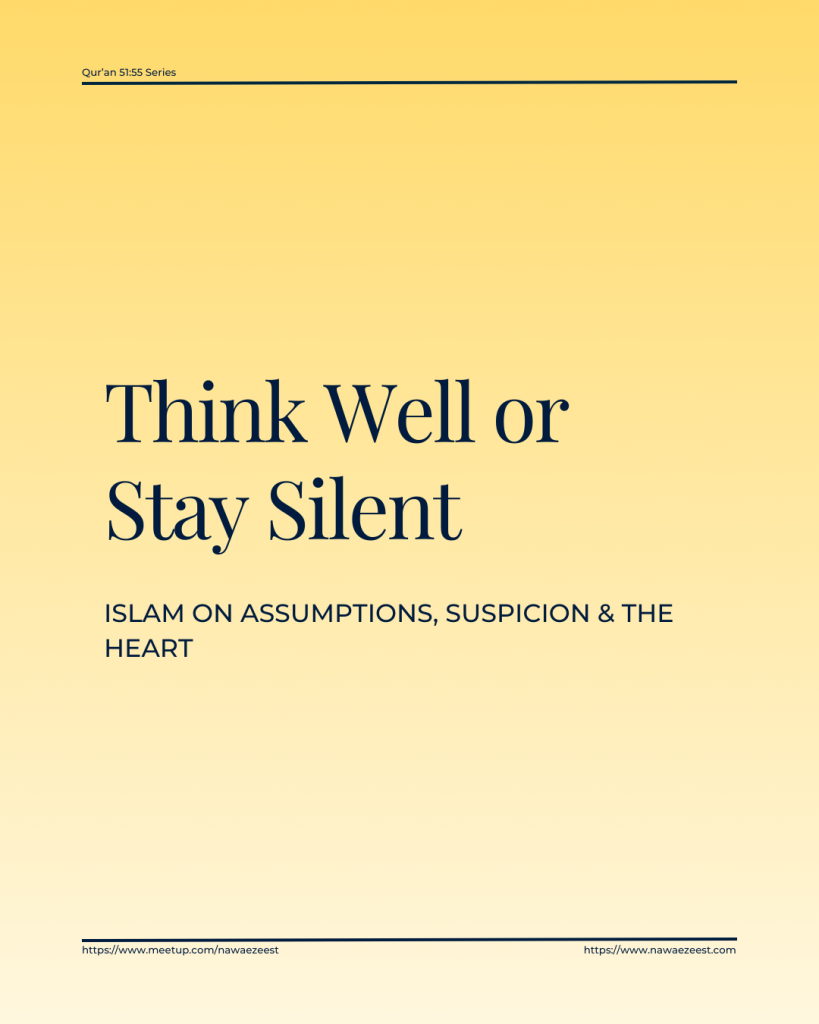
This first part of the three in 51:55 Series is a reminder.
The Qur’an doesn’t just guide our actions — it corrects our thoughts. Allah warns us that some assumptions are sins, not harmless musings. Often, we think that faith is only about what we do outwardly, but Islam teaches that the heart is the starting point. Before words are spoken, before gossip spreads, before harm can take root, our thoughts are already shaping our character.
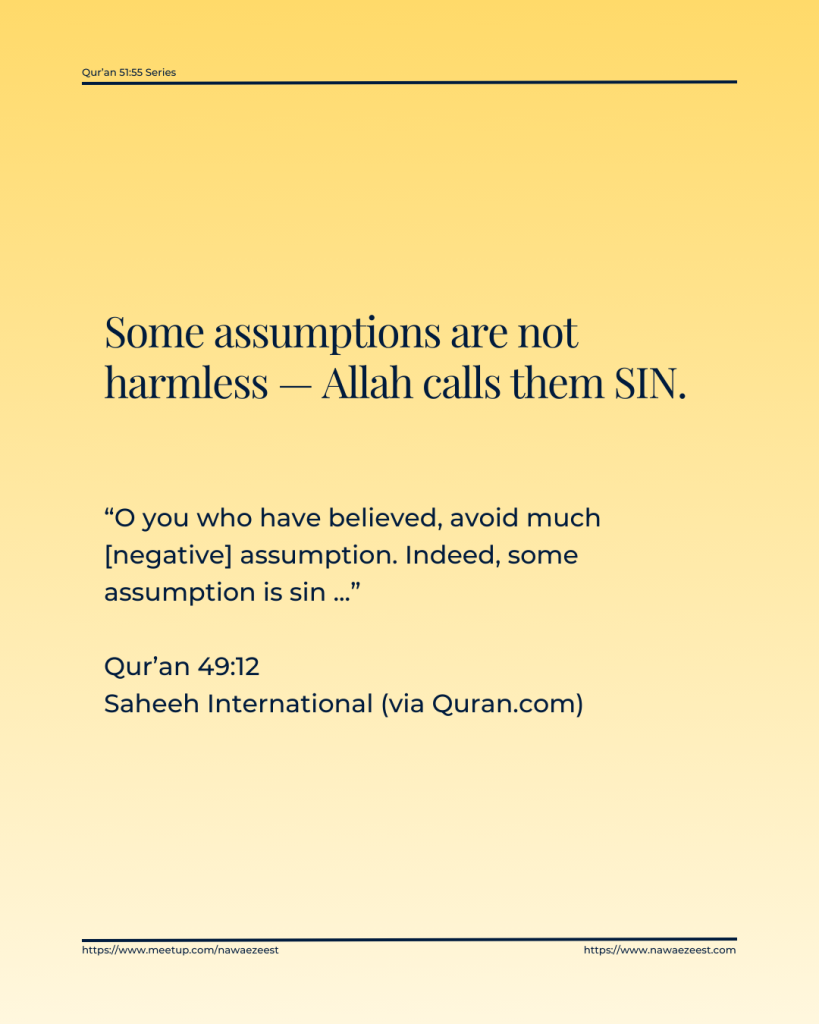
In Surah Al-Hujurat (49:12), Allah says:
“O you who have believed, avoid much [negative] assumption. Indeed, some assumption is sin. And do not spy or backbite each other …”
The warning is clear: some assumptions are not harmless; they are sinful and can lead to spying and backbiting. The heart must be trained to avoid suspicion before it manifests in speech or action.
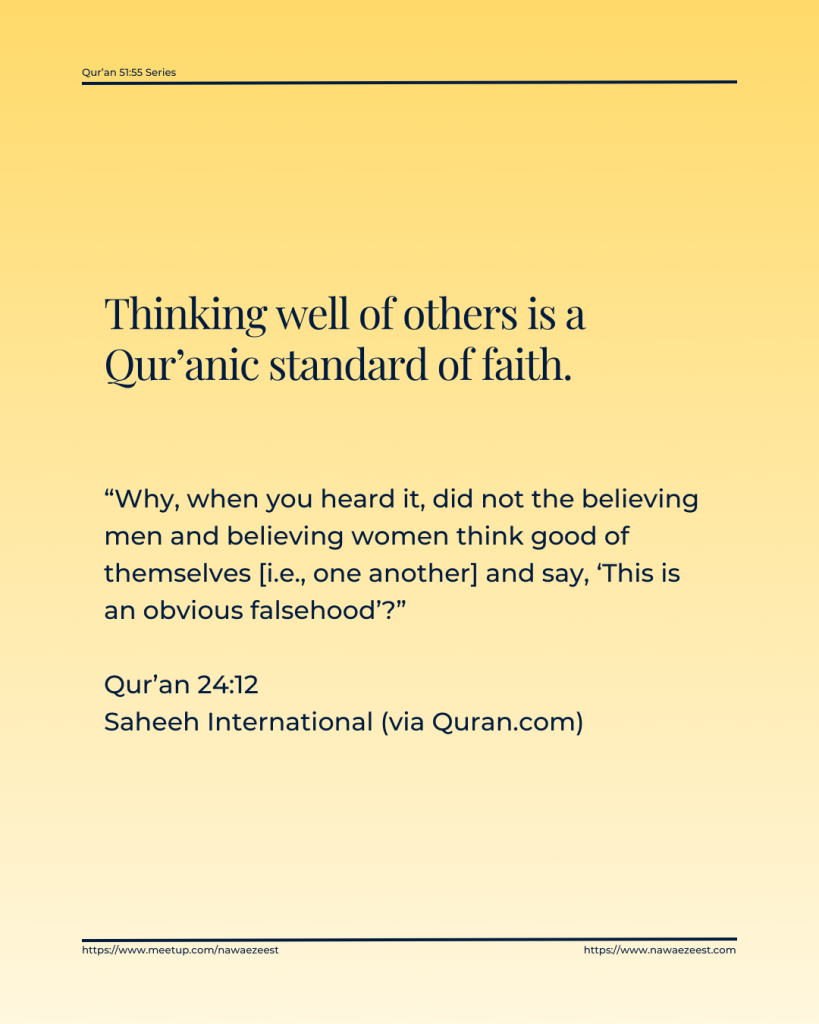
The Qur’an continues in Surah An-Nur (24:12), asking:
“Why, when you heard it, did not the believing men and believing women think good of themselves [i.e., one another] and say, ‘This is an obvious falsehood’?”
Faithful believers are expected to assume the best of others, even in thought. When rumors or doubtful reports reach us, our first instinct should be mercy and trust, not doubt or accusation. Thinking well of others is not naïve; it is a standard of faith.
And in Surah An-Najm (53:28), we are reminded:
“… They follow not except assumption, and indeed, assumption avails not against the truth at all.”
Assumptions cannot substitute for truth. Believing in what we merely suspect, rather than what is verified, leads us away from clarity, justice, and understanding. Faith calls us to seek the truth and temper our thoughts with wisdom.

Thinking well of others is more than an exercise in good manners — it protects hearts and nurtures communities. If there is no proof, we choose mercy. If there is no certainty, we choose silence. The heart is accountable before the tongue. Even fleeting suspicions, if left unchecked, shape our character and influence our actions more than we realize.

Faith begins in the heart. By managing our assumptions and fostering husn al-dhann — thinking well of others — we safeguard our character, protect the honor of those around us, and nurture both personal and communal wellbeing.
Qur’an References:
49:12 (Surah Al-Hujurat), 24:12 (Surah An-Nur), 53:28 (Surah An-Najm)
51:55 Series — “Remind, for reminders benefit the believers” (Qur’an 51:55)